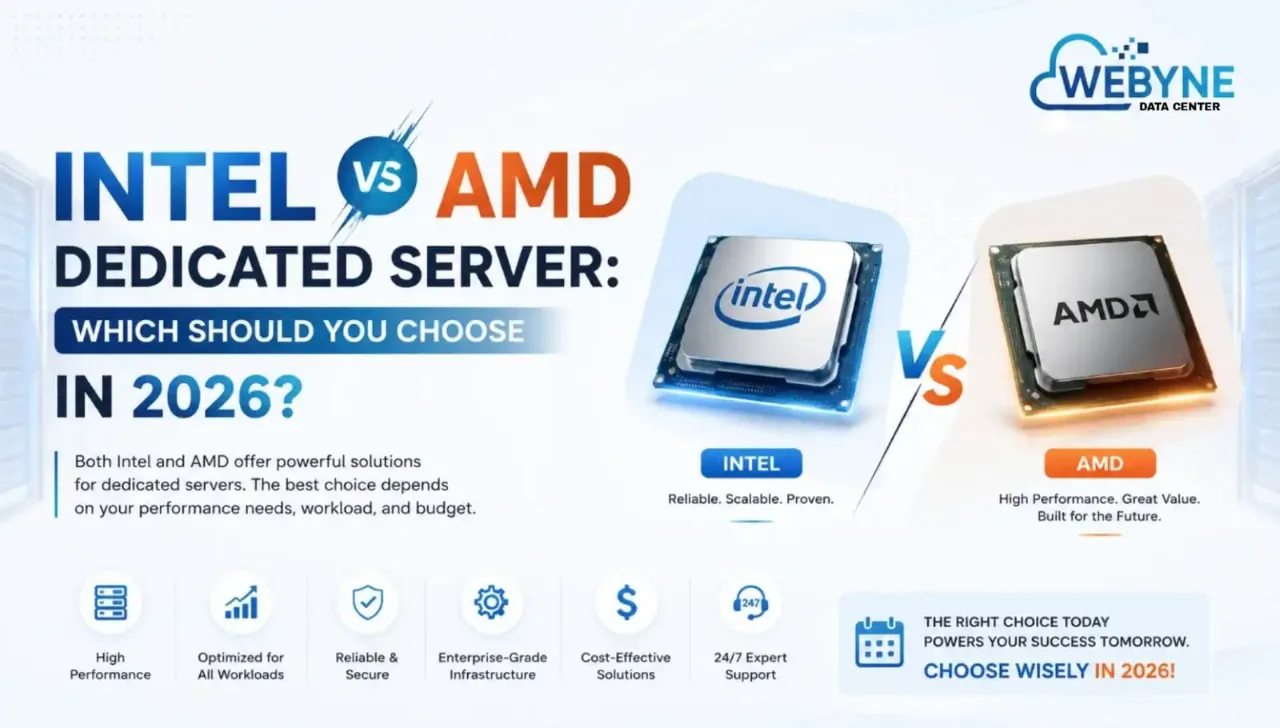
The Intel vs AMD dedicated server debate has shifted significantly over the past several years, with AMD's EPYC and Ryzen lineups closing — and in many benchmarks, exceeding — the performance-per-rupee that Intel Xeon processors offer. Here's how the two actually compare for real-world hosting workloads in 2026.
Where AMD Has Pulled Ahead
1. Core Density and Multi-Threaded Performance
AMD EPYC processors generally offer higher core counts at competitive price points compared to equivalent Intel Xeon options, making them attractive for virtualization, database, and high-concurrency workloads.
2. Memory Bandwidth
AMD's EPYC and Ryzen platforms have consistently supported higher memory bandwidth configurations, particularly with DDR5, benefiting memory-intensive applications.
3. Price-to-Performance
For most hosting workloads, AMD dedicated server configurations tend to deliver more cores, cache, and memory bandwidth per rupee spent compared to similarly priced Intel Xeon alternatives.
Where Intel Still Holds Ground
1. Software Compatibility and Legacy Systems
Some enterprise software, particularly older or highly specialized applications, has been optimized and tested extensively on Intel architecture, making Intel Xeon a safer choice for compatibility-sensitive deployments.
2. Single-Core Performance in Specific Generations
Depending on the specific processor generation being compared, Intel has occasionally maintained an edge in certain single-threaded workloads, though this gap has narrowed significantly with recent AMD Ryzen releases.
3. Established Enterprise Relationships
Many large enterprises have existing infrastructure, licensing agreements, and internal expertise built around Intel platforms, making a switch a bigger operational decision than pure performance metrics would suggest.
Comparing for Common Hosting Workloads
- Web Hosting: AMD Ryzen and EPYC configurations generally offer strong value, with high clock speeds benefiting typical web application response times.
- Database Hosting: AMD EPYC's core count and memory bandwidth advantages make it a strong choice for database-heavy workloads.
- Game Server Hosting: AMD Ryzen's high clock speeds are particularly well-suited to tick-rate-sensitive game servers.
- Enterprise Applications: Both platforms handle enterprise workloads well; the decision often comes down to existing software compatibility and organizational familiarity rather than raw performance.
Cost Comparison
AMD dedicated server configurations frequently undercut equivalent Intel Xeon plans on price while matching or exceeding performance in most hosting-relevant benchmarks — a key reason many hosting providers, including newer premium tiers, have shifted toward AMD-based offerings.
Making the Decision
Ask yourself:
- Does your software stack have any Intel-specific dependencies or certifications? If yes, Intel may be the safer default.
- Is your workload core-count or clock-speed sensitive? AMD generally offers stronger options across both categories at competitive pricing.
- Is price-to-performance a primary decision factor? AMD dedicated server configurations frequently win here.
- Does your team have existing expertise with one platform? Familiarity can be a legitimate factor in reducing operational risk.
Final Thoughts
For most modern hosting workloads — web applications, databases, game servers, and general business applications — AMD dedicated server options frequently offer better price-to-performance than comparable Intel Xeon configurations in 2026. Intel remains a reasonable choice for organizations with specific software compatibility needs or established Intel-based infrastructure, but for new deployments without such constraints, AMD is increasingly the default recommendation.
Curious how AMD-based hosting compares for your specific use case? Explore Webyne's AMD dedicated server plans built on current-generation Ryzen and EPYC processors.