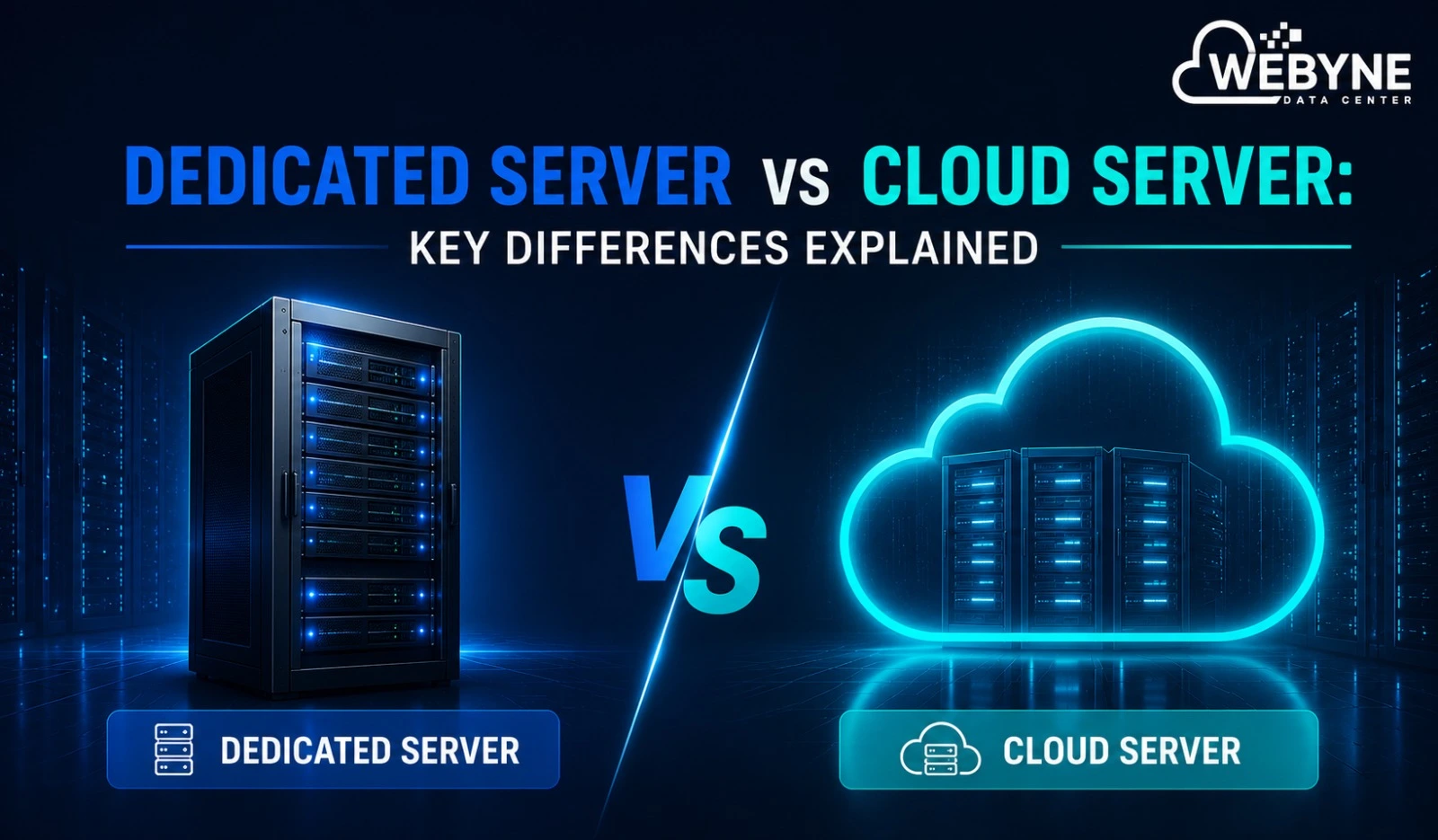
Cloud hosting has become the default recommendation for many new projects, but it isn't automatically the right choice for every workload. Understanding the dedicated server vs cloud server distinction helps you avoid overpaying for flexibility you don't need, or underpowering an application that genuinely requires dedicated hardware.
What Is a Cloud Server?
A cloud server is a virtual machine running on a distributed network of physical servers, managed by a cloud provider. Resources can typically be scaled up or down on demand, and billing is often usage-based rather than a fixed monthly rate.
What Is a Dedicated Server?
A dedicated server, by contrast, is a single physical machine reserved exclusively for one customer. Resources are fixed unless you formally upgrade the plan, and you get complete, isolated control over the hardware.
Core Differences
1. Resource Isolation
A dedicated server means your CPU, RAM, and storage are never shared. A cloud server, while often performant, still runs on shared underlying infrastructure — meaning performance can occasionally be affected by the broader cloud environment, depending on the provider's architecture.
2. Pricing Model
Cloud servers usually bill based on usage, which can be cost-effective for unpredictable or bursty workloads but harder to predict for steady, high-usage applications. A dedicated server comes at a fixed monthly cost, which often works out more economical for consistently high-resource workloads.
3. Performance Consistency
Because a dedicated server isn't virtualized or shared, it delivers highly consistent, predictable performance — valuable for latency-sensitive applications like databases, game servers, or high-transaction e-commerce platforms.
4. Scalability
Cloud servers scale almost instantly, making them well-suited to workloads with unpredictable spikes. Dedicated servers scale by upgrading hardware, which typically takes longer but delivers more raw, dedicated performance per rupee once you're running at consistent high load.
5. Control
Both offer root access, but a dedicated server gives you complete control over the physical hardware and network configuration, without any abstraction layer from a hypervisor.
When to Choose a Dedicated Server
- Your workload runs at consistently high resource usage rather than unpredictable spikes
- You need maximum, predictable performance for databases, applications, or game servers
- You have compliance requirements that benefit from physically isolated hardware
- You want a fixed, predictable monthly cost rather than variable cloud billing
When to Choose a Cloud Server
- Your traffic is highly variable or seasonal, and you want to pay only for what you use
- You need to scale resources up or down quickly and frequently
- You're running distributed applications across multiple regions
- You want to avoid managing physical hardware upgrades
Cost Comparison Over Time
For low or highly variable usage, cloud servers are often more economical short-term. But for applications running consistently at high resource usage — which describes most established, high-traffic websites and business applications — a dedicated server frequently becomes more cost-effective over months and years, since you're not paying a premium for on-demand elasticity you're not actually using.
Final Thoughts
The dedicated server vs cloud server decision comes down to your workload's actual usage pattern. Steady, high-performance needs favor a dedicated server's consistency and predictable cost; unpredictable, bursty workloads favor the cloud's elasticity. Many established businesses ultimately choose dedicated hardware once their traffic patterns become stable and high enough to make the fixed cost worthwhile.
Not sure which fits your workload? Talk to Webyne's team about your traffic patterns — we'll help you decide between a dedicated server and cloud infrastructure based on your actual usage.