
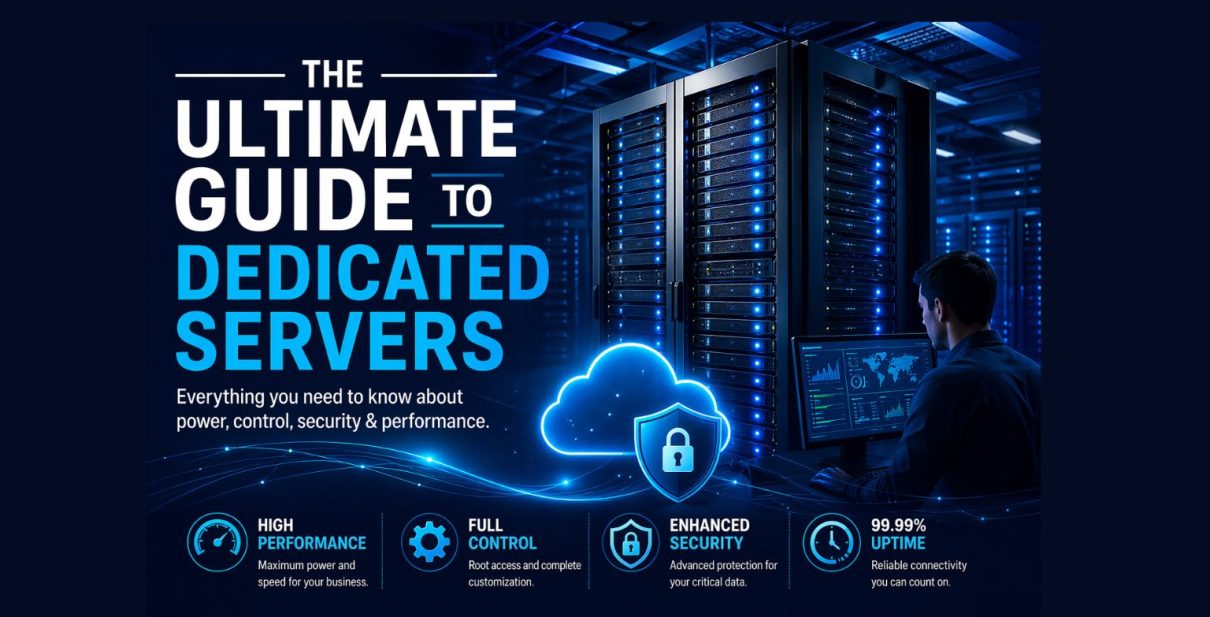
In today’s digital landscape, the infrastructure powering your online presence can make or break your success. While shared hosting and cloud platforms have their place, there’s a class of hosting solution that stands apart — the dedicated server.
Whether you’re running a high-traffic website, a demanding application, or sensitive enterprise workloads, understanding dedicated servers is fundamental to making the right infrastructure decision.
What is a Dedicated server?
A dedicated server is a physical machine — housed in a data center — exclusively reserved for a single client. Unlike shared hosting, where dozens of websites compete for resources on one machine, a dedicated server gives you the entire hardware to yourself.
Think of it this way: shared hosting is like renting an apartment, while a dedicated server is owning the entire building. You control everything — the operating system, installed software, security configurations, and how resources are allocated.
Key features of a Dedicated server
Full resource access
100% of CPU, RAM, and storage — no sharing with other users.
Enhanced security
Isolated environment means no cross-contamination from other accounts.
Full customization
Choose your OS, software stack, and configure hardware to your needs.
Predictable performance
Consistent speeds without performance spikes from other tenants.
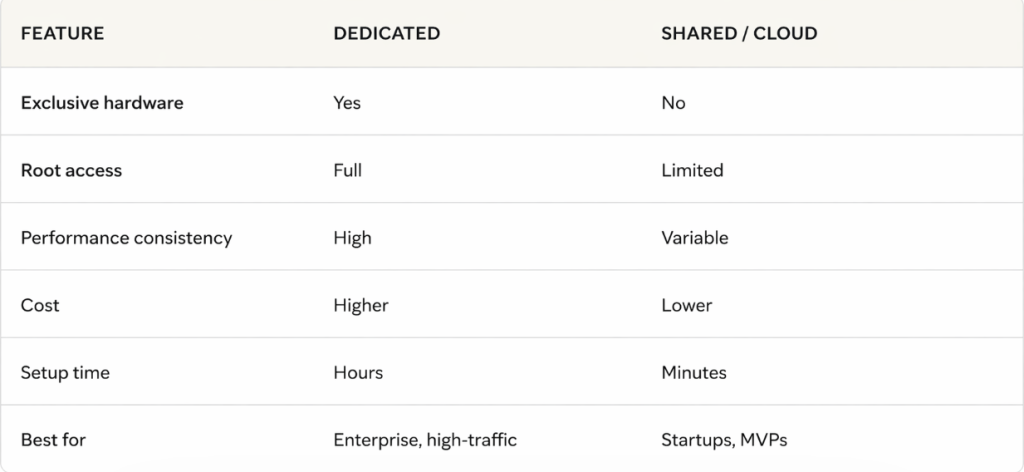
Dedicated vs. shared vs. cloud: how do they compare?
Choosing the right hosting solution depends on your workload, budget, and technical requirements. Here’s a direct comparison:
Dedicated servers aren’t for everyone — but for the right use cases, they’re unbeatable. You should consider a dedicated server if:
You run high-traffic websites. E-commerce platforms, media sites, and SaaS applications with thousands of concurrent users need consistent, reliable performance that shared environments simply can’t guarantee.You handle sensitive data. Healthcare providers (HIPAA), financial institutions, and businesses processing payments need the isolation and control that only dedicated hardware provides.You have custom software requirements. If your application needs a specific operating system version, kernel module, or hardware driver, shared environments often block those configurations.You need gaming or streaming servers. High-performance gaming servers, video streaming platforms, and real-time applications demand the raw, unshared power of dedicated hardware.
Managed vs. unmanaged Dedicated servers
There are two flavors to choose from. With a managed dedicated server, your hosting provider handles OS updates, security patches, monitoring, and backups — ideal if you want power without the operational overhead. An unmanaged server gives you complete control but requires your own technical team to handle maintenance.
How to Choose the Right Dedicated server
When evaluating dedicated server providers, focus on these critical factors: processor speed and core count, RAM capacity and upgrade paths, storage type (NVMe SSD vs. HDD), network bandwidth and uptime SLAs, data center location relative to your users, and the quality of support offered.
Most reputable providers offer configurations ranging from entry-level servers with 16GB RAM and quad-core processors to enterprise-grade machines with 512GB RAM and multi-socket CPUs — matched to virtually any workload.


