How affordable cost providers like Webyne are reshaping GPU pricing—and what it means for AI teams
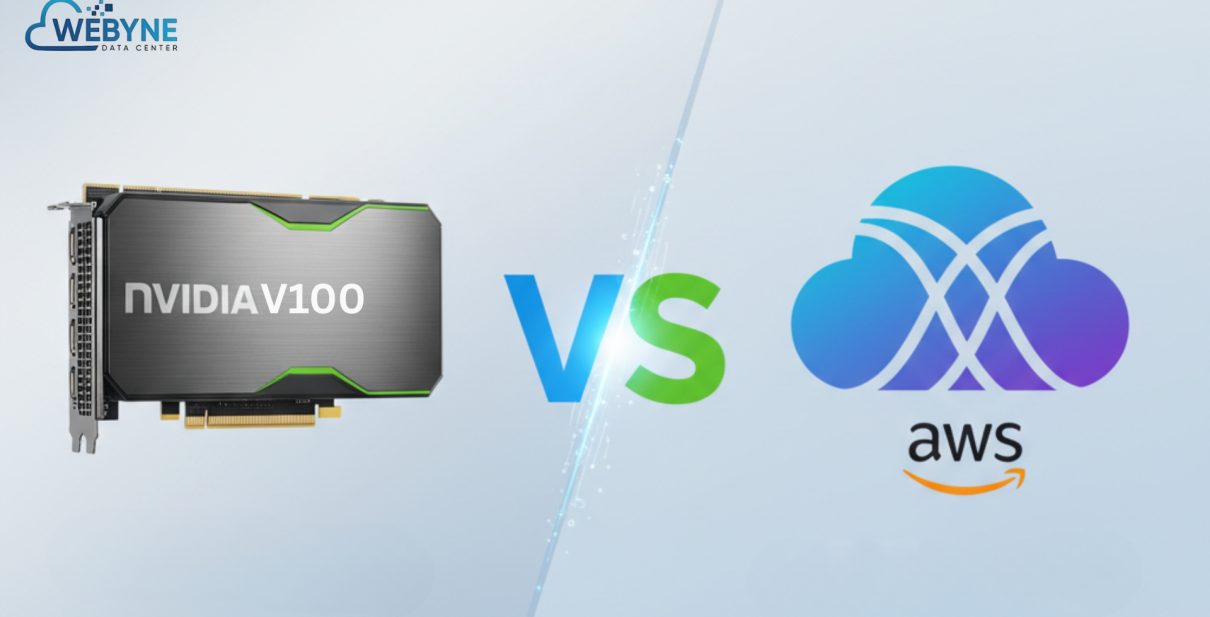
A growing number of cloud providers are challenging traditional pricing models for GPU computing. Webyne, a platform from India, is making the NVIDIA V100 available for a price of about $0.12/hour. In comparison, AWS EC2 instances that offer V100’s typically range around ~$3/hour. The gap in pricing is significant enough for developers, researchers, and start-ups to reconsider where and how they can source their GPU compute.
Fast facts — who, what, when, where, why
- Who: Both global GPU marketplaces and regional providers are making it affordable to access V100’s.
- What: Pay-as-you-go instances of NVIDIA V100 for your AI training and inference workloads.
- When: Price competition has been increasing over the last 2 years as the supply of GPU’s and marketplace platforms have matured.
- Where: World wide. Local players like Webyne are able to provide GPU access to India and other countries.
- Why: The lower entry point means smaller teams can experiment and scale AI projects at a lower cost.
The price gap, in context
Hyperscale providers like AWS include robust networking, enterprise-grade SLAs, and broader ecosystem integration in their pricing. A single p3.2xlarge instance with one V100 typically runs around $3/hour. By contrast, specialist providers and GPU marketplaces—focused on affordability and leaner infrastructure—offer V100s closer to $0.12–$0.15/hour.
For students, early-stage startups, and academic researchers, that delta can make the difference between running a full experiment or shelving it due to cost constraints.
Why the NVIDIA V100 still matters?
The NVIDIA Tesla V100 remains a popular choice for deep learning and HPC workloads. With 16–32GB of HBM2 memory, thousands of CUDA cores, and 640 Tensor Cores, it still delivers strong performance for model training, simulation, and inference tasks. While newer GPUs (A100, H100) lead in raw power, the V100’s availability at lower cost provides excellent value for many use cases.
How providers make cheaper V100s available?
Low-cost access usually comes in two ways:
- GPU marketplaces, such as Vast.ai, aggregate spare capacity and pass on competitive, real-time pricing.
- Specialised providers (such as Webyne) that operate dedicated GPU servers with simplified billing and fewer add-ons compared to hyperscalers.
- By offering pay-as-you-go pricing, combined CPU/RAM/SSD resources, and data centers by region, these platforms lower the barriers for non-enterprise users who do not require the full AWS stack.
The Indian perspective: accessible at scale
In the Indian market, providers like Webyne are emphasizing straightforward pricing and have stipulations for regional infrastructure (which not only helps balance latency for local end-users but also their global customers). Their frugality-based positioning is they are making GPU compute accessible for start-ups, researchers, and developers who are typically priced out of hyperscaler cloud platforms.
That said, AWS and its competitors are still unrivalled for enterprises because they will continue to guarantee availability, compliance certifications, and global redundancy—is the trade-off cost vs convenience and reliability?
Considerations before selecting a low-cost V100
- Instance type: Dedicated vs preemptible (spot) because spot can be terminated.
- Network & egress cost: Check data transfer charges that could stack up.
- Support & SLA: Lower-cost platforms do not offer the same assurances as AWS.
- Software stack: Preconfigured drivers and ML frameworks could dramatically reduce set up time.
- Regional availability: Local nodes will reduce your latency and transfer costs.
Who benefits most?
- Students and academics running short-lived experiments.
- Indie developers prototype and test with a tight budget.
- Startups refining on-the-ground models, without enterprise infrastructure.
For Production training at scale, or workloads that require hard SLAs, the reliability of AWS or other hyperscalers may still outweigh any potential savings.
The bigger picture
The advent of sub-$0.20/hour access to V100s (and beyond) is part of a broader democratization of AI infrastructure. With the involvement of India based providers, who contribute to this trend, we see the emergence of India as a cost-disruptor to the cloud computing space. These platforms make GPUs cheaper, thereby creating possibilities for more voices (students, researchers, small businesses, etc.) to now have opportunities to participate in the global race in AI.
The bottom line
AWS has established itself as the gold-standard for reliability and simplicity/integration—but new players, like Webyne, present a viable alternative: affordable, flexible access to NVIDIA V100s for a fraction of the cost. When teams are thinking of options, reliability, costs and support must be balanced—but the reality is the GPU cloud market is diversifying, and affordability is at its centre.